
How to Earn Money Proofreading Online: Step-by-Step Guide
Looking for a side hustle that’s easy to learn, doesn’t cost a lot to start, and can start earning you money fast? Then, learning how to earn money proofreading online could be the side hustle for you.
To make money as a proofreader online, you will need to understand basic grammar skills, the tools you will use, like Grammarly and Hemingway, how to price yourself competitively, how to market yourself on platforms like Upwork, and how to scale your business.
This guide walks you through everything—from understanding what proofreading actually involves to landing your first paying client and scaling up. No fluff, no get-rich-quick nonsense. Just a practical roadmap to help you start earning money proofreading online.
What Is Proofreading, and Can You Really Make Money Doing It?
Before we dive into the how-to stuff, let’s clear something up: proofreading isn’t the same as editing. Editors restructure content, rewrite clunky sentences, and sometimes challenge the author’s entire approach.
Proofreaders? We’re the cleanup crew. We catch typos, fix grammar goofs, spot inconsistent formatting, and make sure everything’s polished before it goes live.
And yes, you can absolutely earn real money doing this. Beginners typically make between $15 and $25 per hour, while experienced proofreaders working in specialized niches (think medical journals or legal documents) can earn $50 to $75 per hour or more.
Can you turn it into a full-time income? Sure. Plenty of people do. But most folks start with proofreading as a side hustle—a way to make an extra $500 to $2,000 a month working evenings and weekends. The flexibility is honestly one of the biggest perks.

Step 1: Understand the Skills You Actually Need
Here’s the good news: you don’t need a degree in English Literature or a fancy certification to get paid for proofreading. What you do need is a solid grasp of grammar, punctuation, and style conventions. If you know the difference between “affect” and “effect,” understand when to use a semicolon, and can spot a misplaced modifier from a mile away, you’re already in good shape.
But honestly? The most underrated skill isn’t grammar knowledge—it’s attention to detail. Proofreading means reading slowly, methodically, and sometimes reading the same sentence three times to catch that one sneaky error everyone else missed.
You’ll also want to develop niche knowledge over time. Business proofreaders need to understand corporate tone and formatting. Academic proofreaders should know citation styles like APA or Chicago. The more specialized you get, the more you can charge.
Core Skills for Paid Proofreading:
- Grammar and punctuation mastery – You should know the rules well enough to explain why something’s wrong
- Style guide familiarity – AP, Chicago, APA, and MLA are the big ones
- Consistency checking – Catching when someone uses “website” on page 2 and “web site” on page 10
- Format awareness – Understanding document structure, headers, lists, and visual hierarchy
- Research ability – Sometimes you need to verify facts or check industry-specific terminology
- Time management – Meeting deadlines is non-negotiable when clients are paying you
Do you need to master all this before starting? Absolutely not. You’ll learn on the job. But if you’re shaky on basic grammar, invest a few weeks brushing up before you start charging money.
Step 2: Get Trained (But Don’t Overthink This Part)
One of the most common questions I hear: “Do I need a degree or certification to start earning money as a proofreader?”
Short answer: Nope.
Longer answer: While certifications aren’t required, taking a course can seriously speed up your learning curve and give you the confidence to start charging real rates. Plus, some clients feel more comfortable hiring someone who’s completed formal training.
Here’s what I recommend: invest in one solid course that teaches you the business side along with the technical skills. You want something that covers how to find clients, set rates, and manage workflow—not just grammar drills.
Top Courses to Fast-Track Your Proofreading Income:
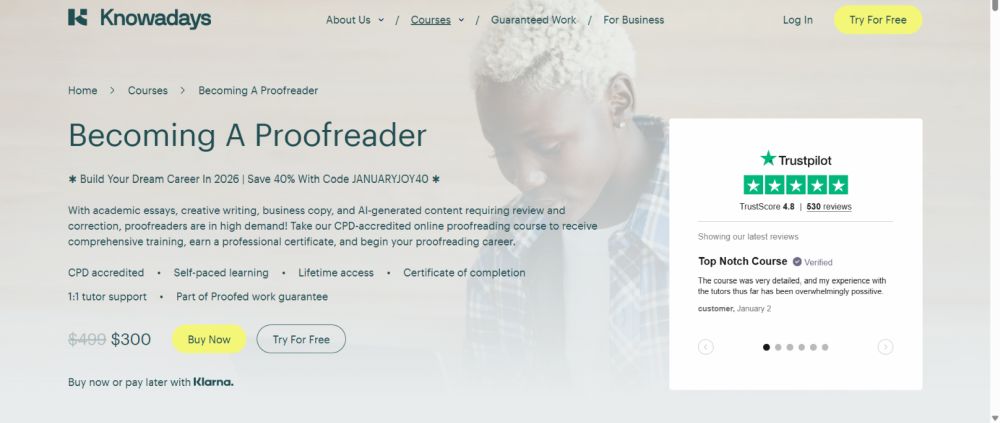
Knowadays – Proofreading for Professionals is designed specifically for people who want to move into paid professional work quickly. It covers workflow, style standards, and the business skills you actually need to earn money. Click here to sign up to Becoming a Proofreader and get 2 FREE lessons.
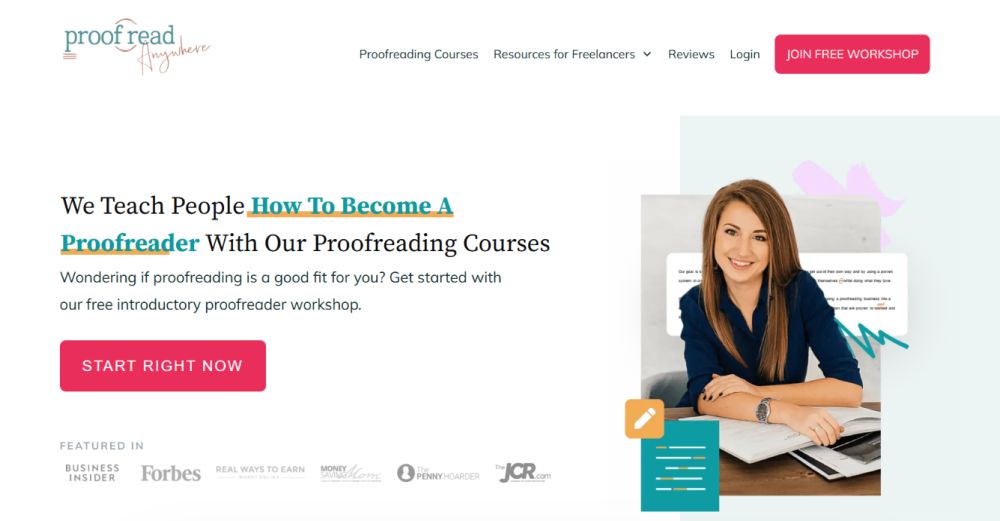
Proofread Anywhere offers training focused on turning proofreading into a side hustle or full business, with practical guidance on client acquisition and pricing. Click here to access a free workshop now.
The key is this: don’t use “getting trained” as an excuse to avoid starting. Take a course if it helps, but don’t spend six months studying before you take action. You’ll learn more from your first five paid projects than from any textbook.
Step 3: Choose Your Proofreading Tools Wisely
Professional proofreaders work faster and deliver cleaner results by using the right tools. You don’t need every fancy piece of software out there, but investing in a couple of quality tools will help you handle more clients and earn more money.
Essential Tools That’ll Boost Your Income:
Grammarly Premium is probably the most widely used proofreading assistant out there. It catches grammar, spelling, and style issues that you might miss during a quick read-through. The premium version offers advanced suggestions that help you deliver cleaner work faster—meaning you can handle more paying clients without burning out.
ProWritingAid is an all-in-one editing and proofreading tool that’s especially popular with book proofreaders, business writers, and bloggers. It checks style, readability, and grammar, and the reports help you spot patterns in your work.
Hemingway Editor focuses on readability. It highlights complex sentences, passive voice, and hard-to-read sections. If you’re proofreading web content and blog posts, this one’s gold.
For proofreaders working with international clients, LanguageTool supports multiple languages and catches grammar and spelling issues across different linguistic contexts.
If you’re planning to specialize in academic or technical proofreading, Trinka AI is built specifically for that niche. It understands scientific terminology and academic style conventions, which can help you earn more in high-paying specialized markets.
| Tool | Best For | Approximate Cost | Key Benefit for Earning |
|---|---|---|---|
| Grammarly Premium | General proofreading | $12–$30/month | Faster error detection = more clients |
| ProWritingAid | Books, business content | $20/month or $120/year | Comprehensive reports impress clients |
| Hemingway Editor | Web content, blogs | Free or $20 one-time | Improves readability quickly |
| LanguageTool | Multilingual projects | Free or $5–$20/month | Expands your client base internationally |
| Trinka AI | Academic, technical | Free tier available | Access to higher-paying niche work |
Don’t feel pressured to buy everything at once. Start with one tool (Grammarly’s free version works fine initially), then add others as you start earning and identify what you actually need.
Step 4: Decide Where You’ll Find Your First Paying Clients
This is where most people get stuck. You’ve got the skills, you’ve maybe taken a course, you’re ready to work—but where do you actually find people willing to pay you?
The truth is, there are dozens of ways to find proofreading clients online. The trick is to start with one or two platforms, get some wins under your belt, then expand.
Best Platforms for Landing Proofreading Side Hustle Work:
Upwork is probably the biggest freelance marketplace for proofreading jobs. You’ll find everything from one-off blog post reviews to ongoing contracts with content agencies. The competition can be fierce, especially when you’re new, but if you write a solid proposal and start with lower rates to build reviews, you can land consistent work.
Fiverr works differently—it’s gig-style, meaning you create service packages (like “I’ll proofread up to 1,000 words for $10”) and clients come to you. This is fantastic for beginners because you can start small, build up reviews, and gradually increase your rates.
LinkedIn isn’t a job board, but it’s one of the best platforms for marketing your proofreading services directly to business owners and content teams. Post about your services, engage with content creators, and reach out to potential clients in your network. I know several proofreaders who get most of their work through LinkedIn connections.
Beyond these big three, you can also check out:
- Indeed and Remote.co for proofreading jobs from home listings
- Contently and Scripted for content platform opportunities
- Reedsy specifically, if you want to proofread books for self-published authors
- Facebook groups and online communities where business owners and writers hang out

Here’s my advice: pick one platform and commit to it for at least a month. Set up a solid profile, apply to or list 10-15 gigs, and see what happens. You’ll get rejected. That’s normal. Keep going.
Step 5: Set Your Rates (Without Undervaluing Yourself)
Pricing is tricky when you’re just starting out. You want to be competitive enough to land clients, but you also don’t want to work for peanuts.
Here’s what typical proofreading rates look like:
- Beginners: $15–$25 per hour or $0.01–$0.02 per word
- Intermediate proofreaders: $25–$40 per hour or $0.02–$0.04 per word
- Experienced specialists: $50–$75+ per hour or $0.05+ per word
You can charge per hour, per word, or per project. Each has pros and cons.
- Per-word pricing is common for books and long documents.
- Per-hour works well for business proofreading, where you might need to check facts or format.
- Per-project rates give you more control and can be more profitable once you get faster.
My recommendation? Start slightly below market rate to build your portfolio, but not so low that clients assume you’re inexperienced or desperate. After you’ve completed 5-10 projects and have solid reviews, bump your rates up by 20-30%.
And please, don’t feel guilty about raising your prices. As you get faster and better, you’re delivering more value. Charge accordingly.
Step 6: Land Your First Paying Gig
Okay, you’ve set up your profile. You’ve written a bio. You’re ready. Now what?
For platforms like Upwork: You need to write proposals that actually get read. Skip the generic “I’m a hard worker and detail-oriented” stuff. Instead, address the client’s specific needs. If they mention they need someone who understands AP style, say, “I’ve been using AP style for three years and can ensure your blog posts match your brand standards.” Show you’ve read their job posting.
For Fiverr: Your gig title and description are everything. Be specific about what you offer. “I will proofread your blog post, article, or website copy up to 1,000 words” is way better than “proofreading services.” Include what’s included (grammar check, spell check, formatting review) and what’s not (rewriting, content strategy).
For LinkedIn and direct outreach: You need to provide value first. Comment thoughtfully on posts, share useful insights, and position yourself as someone who knows the proofreading game. When you reach out to potential clients, reference something specific they’ve posted and explain how you can help.
“I noticed you mentioned struggling with consistency in your newsletter—I specialize in helping content creators maintain clean, professional copy” works way better than ‘Do you need a proofreader?”
When you get your first inquiry, respond quickly and professionally. Ask clarifying questions about the project, provide a clear quote, and set expectations around turnaround time.
Here is a simple email template you can use to help find clients.
Subject: Quick question about your content
Hi [Name],
I noticed [specific detail about their business/content—blog, website, LinkedIn posts, etc.]. Your expertise really comes through.
I’m a professional proofreader, and I help [type of businesses] make sure their content is polished and error-free before it goes out. Even the best writers miss things when they’re close to their own work.
Would it make sense to chat briefly about how I could help ensure your [content type] always looks as professional as the work you do?
Best, [Your Name]
This email works because it’s personalized (shows you did research), acknowledges their expertise (not condescending), offers clear value, and has a soft, conversational call-to-action. The key is filling in those brackets with specifics for each prospect—that’s what gets responses.
Step 7: Deliver Exceptional Work (And Get Those Five-Star Reviews)
Here’s the thing about freelance proofreading: your reputation is everything. One glowing review can lead to three more clients. One sloppy job can tank your credibility.
When you get that first paid project, treat it like it’s the most important document you’ve ever seen. Read it once to understand the content. Read it again slowly to catch errors. Then read it a third time focusing on consistency and formatting.
Use track changes or suggestion mode so clients can see exactly what you’ve fixed. Include a brief summary note explaining the types of errors you found and any style choices you made. This shows you’re thorough and professional.
Pro Tip: Meet your deadlines. If you said you’d have it done by Friday at 5 PM, have it done by Thursday at 4 PM. Underpromise, overdeliver.
And when the project’s done, politely ask for a review or testimonial. Something like “If you’re happy with my work, I’d really appreciate a quick review on my profile—it helps me land more projects.” Most clients are happy to do this if you’ve done good work.
Step 8: Specialize in a Niche That Pays Well
Once you’ve got a few projects under your belt, consider specializing. Generalist proofreaders make decent money, but niche specialists make great money.
Proofreading Niches That Pay the Most:
Academic proofreading – Universities, researchers, and grad students need their papers polished before submission. If you understand citation styles and academic conventions, this pays well.
Business and corporate proofreading – Companies need reports, presentations, white papers, and marketing materials proofread. Business clients often have bigger budgets and value professionalism.
Book proofreading – Self-published authors need proofreaders before launch. This can be lucrative, especially if you build relationships with prolific authors who need regular help.
Medical and legal proofreading – These are highly specialized and command premium rates, but you’ll need to invest time learning the terminology and standards.
Blog and web content proofreading – Content agencies and bloggers need fast, reliable proofreaders. The rates might be lower than in specialized niches, but the volume of work is consistent.
You don’t need to commit to a niche immediately. Try a few different types of projects, see what you enjoy, and pay attention to which clients pay the best and are easiest to work with. Then double down.
Step 9: Scale Your Proofreading Side Hustle Into a Real Business
At some point, you’ll hit a ceiling. You can only proofread so many words per day. If you want to grow beyond a modest side hustle, you need to think strategically.
Here are a few ways to scale:
Raise your rates. Seriously. If you’re booked solid and turning down work, you’re undercharging. Increase your rates by 25-50% and see what happens. You’ll lose some price-sensitive clients, but the ones who stay will pay you more for the same work.
Offer related services. Once you’re known as a solid proofreader, you can add light editing, formatting, or fact-checking services. These upsells increase your per-project income without requiring dramatically more time.
Build systems and templates. Create checklists, style guides, and templates for common project types. The faster you work without sacrificing quality, the more you earn per hour.
Hire subcontractors. If you’re getting more work than you can handle, consider bringing on another proofreader to help. You manage the client relationship and take a cut, while they do the work. This is how you transition from freelancer to business owner.
Create passive income streams. Some proofreaders create online courses teaching their skills or sell templates and checklists to other proofreaders. It’s not fully passive, but it adds income beyond hourly work.
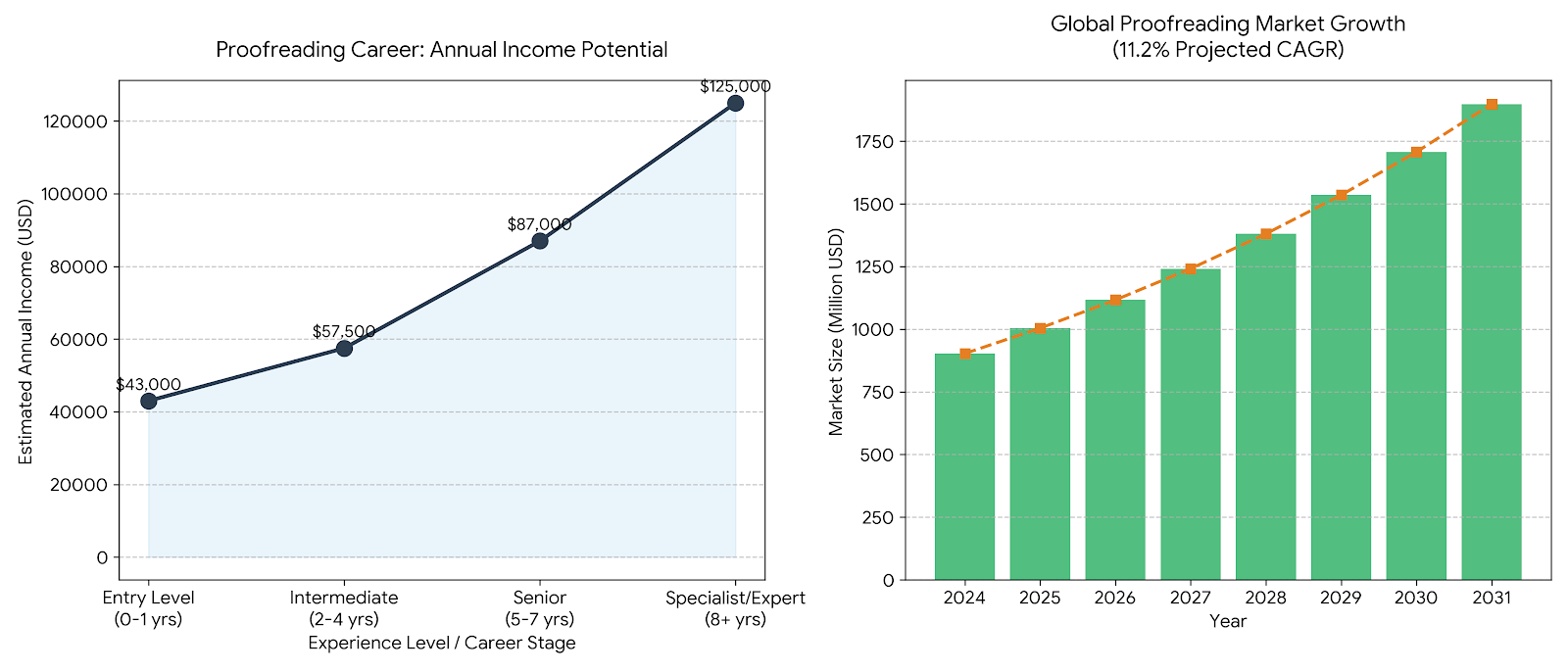
Below is the earning potential with proofreading and the expected growth through 2031 according to CAGR.
Step 10: Stay Competitive as AI Tools Become More Common
Let’s address the elephant in the room: is proofreading still profitable with AI tools becoming more common?
Here’s my take. Yes, AI tools like ChatGPT, Grammarly, and Jasper are getting better at catching grammar mistakes and suggesting rewrites. But they’re far from perfect, and they lack the nuanced understanding that human proofreaders bring.
AI can miss context-specific errors. It doesn’t understand brand voice the way a human does. It can’t make judgment calls about when breaking a grammar rule actually makes the writing stronger.
Smart proofreaders don’t compete with AI—they use it. Tools like Jasper and editGPT can speed up your initial review, catching obvious errors so you can focus on the subtle stuff that requires human judgment. This makes you faster and more valuable.
The proofreaders who’ll thrive are the ones who combine AI efficiency with human expertise. You’re not just catching typos anymore—you’re ensuring consistency, maintaining brand voice, and delivering a polished final product that AI alone can’t achieve.
Step 11: Market Yourself Consistently
Even when you have steady work, keep marketing. Post on LinkedIn. Update your Fiverr gig. Reach out to potential clients. Ask past clients if they have more work coming up.
Marketing doesn’t have to be complicated. A simple strategy might look like:
- Spend 30 minutes a day applying to new jobs on Upwork
- Post one helpful proofreading tip on LinkedIn each week
- Email three past clients each month to check in and offer your services
- Join one Facebook group or online community where your ideal clients hang out
The goal is consistency, not perfection. The proofreaders who earn the most aren’t necessarily the most skilled—they’re the ones who consistently show up and make it easy for clients to find and hire them.
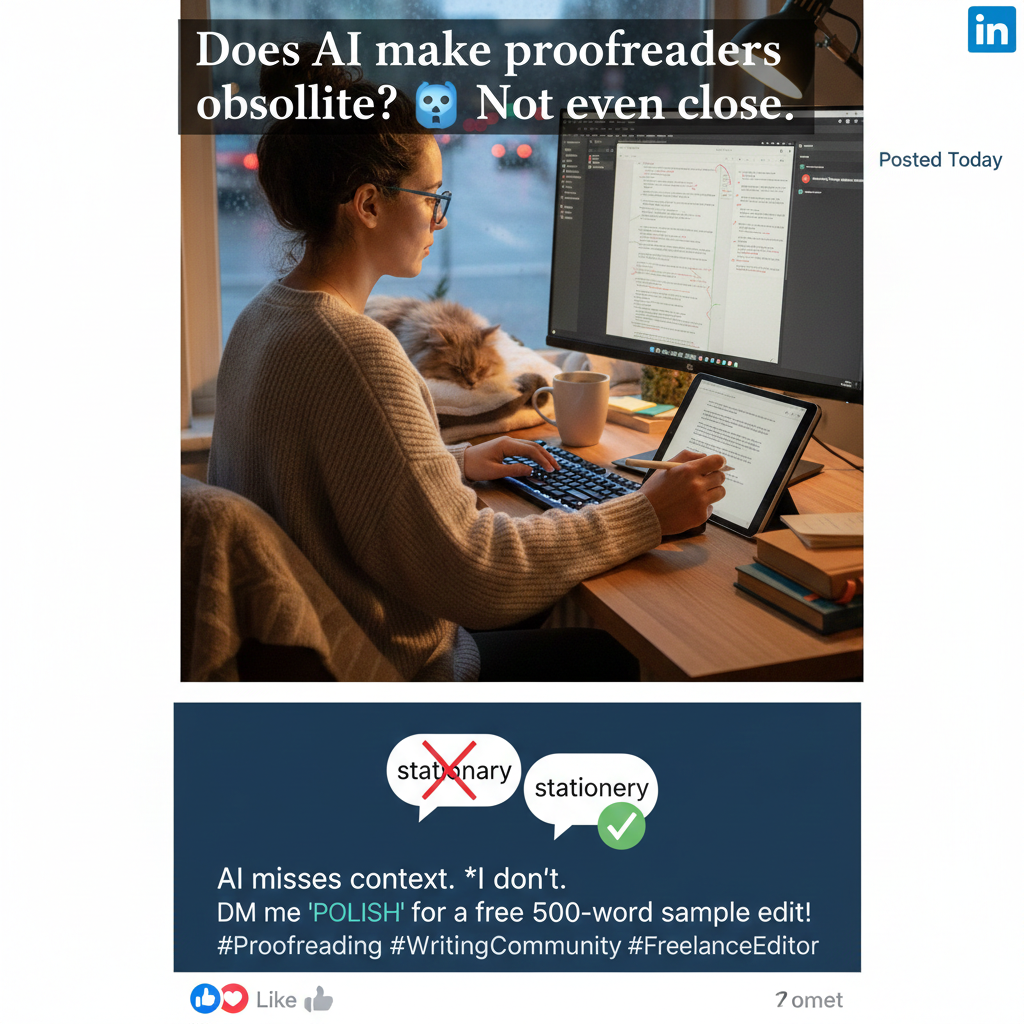
Here a simple AI meme I create that says a lot about how you could help writers as proofreader. It offers a free trial and says a lot more than a long paragraph on Linkedin or Facebook.
Step 12: Track Your Income and Treat This Like a Real Business
If you’re serious about earning money proofreading online, track everything. How much you’re making per project, how long each project takes, which clients pay the best, which platforms bring in the most work.
Use a simple spreadsheet or tools like FreshBooks or Wave (both have free plans). This helps you:
- Understand your true hourly rate
- Identify which clients and niches are most profitable
- Prepare for taxes (yes, you’ll need to pay taxes on this income)
- Make data-driven decisions about raising rates or dropping low-paying clients
Also, set aside 25-30% of your income for taxes if you’re in the US. Quarterly estimated tax payments are required once you’re making decent money, and you don’t want a nasty surprise come April.
Common Mistakes to Avoid
Let me save you some headaches by pointing out mistakes I see new proofreaders make all the time:
Working for way too cheap. I get it—you want experience. But working for $5 per 1,000 words isn’t building your business, it’s teaching clients they can lowball you. Set a floor and stick to it.
Not reading the entire document before starting. You need context. Skim the whole thing first so you understand the tone, style, and purpose before you start marking up every sentence.
Over-editing. Your job is to proofread, not rewrite. If the client wants editing, charge editing rates. Don’t give away extra work for free.
Missing deadlines. This one’s a killer. If you can’t meet a deadline, communicate early. But honestly, just meet your deadlines.
Not specializing. Generalists compete on price. Specialists compete on expertise. Figure out your niche and own it.
Final Thoughts: You Can Actually Do This
Look, I’m not going to lie to you and say proofreading will make you rich overnight. It won’t. But it’s one of the most accessible, flexible ways to earn money online—especially if you’re detail-oriented and enjoy working with words.
The people who succeed with this aren’t necessarily the most talented writers or the biggest grammar nerds. They’re the ones who start, who learn from each project, who gradually raise their rates, and who treat this like an actual business rather than a hobby.
You don’t need permission to start. You don’t need a certification (though it helps). You don’t need to be perfect.
Pick a platform, create a profile, apply to your first five gigs this week, and see what happens. The worst-case scenario? You learn something and make a little money. The best-case scenario? You build a flexible income stream that gives you freedom and financial breathing room.
So here’s my question: what’s stopping you from starting today?
Ready to dive deeper? Check out these resources:
- Sign up for Become a Proofreader and try 2 lessons for free
- Create your Upwork or Fiverr profile tonight and set up your first gig
- Grab Grammarly Premium or ProWritingAid and start getting familiar with professional proofreading tools
- Join LinkedIn and start connecting with content creators in your niche
The opportunity is there. Go grab it.