
How to Make Money With AI Music in 2026 (Step-by-Step Guide)
Let me ask you something. What if you could open a laptop, type a few sentences, and have a full song, complete with vocals, melody, and production, ready to upload to Spotify in under five minutes?
With apps like Suno, this is the reality we live in today. You can describe a song, write some lyrics, upload a riff on your guitar, and it will transform it into the next big hit. I signed up and created four songs already.
Now, just because you can create a handful of AI-generated songs doesn’t mean you’re going to be rich, much less famous. It’s going to take a lot more than that, but it doesn’t mean you can’t make money with AI music.
I’m going to show you exactly how they’re doing it, step by step. We’ll use Suno as our main tool because it’s the most accessible and monetization-friendly option right now. I’ll also cover the full picture: platforms, strategies, legal stuff, and realistic income expectations.
Let’s get into it.
Step 1: Understand What You’re Actually Building (And Why It Works)
Before you generate your first track, you need to understand the business model you’re building. This matters more than any tool you use.
AI music income doesn’t usually come from one big payday. It comes from catalog volume + distribution, meaning you build a library of tracks over time and put them in front of audiences and buyers who need them. Think of it like renting out dozens of small apartments rather than selling one mansion.
The main income channels are:
- Streaming royalties (Spotify, Apple Music, YouTube Music)
- YouTube ad revenue (lofi channels, study playlists, ambient music)
- Sync licensing (brands, ads, indie games, podcasts, YouTube creators)
- Stock music libraries (AudioJungle, Pond5, Musicbed)
- Direct sales (Bandcamp, Gumroad, beat stores)
- Client work (custom tracks for content creators, apps, brands)
You don’t need to pursue all of these at once. In fact, I’d strongly recommend picking one or two and getting traction there before expanding. The creators who fail with AI music usually do so because they spread themselves thin across every platform simultaneously and see zero momentum anywhere.
Now let’s talk tools.
Step 2: Get Set Up on Suno (The Right Way for Monetization)
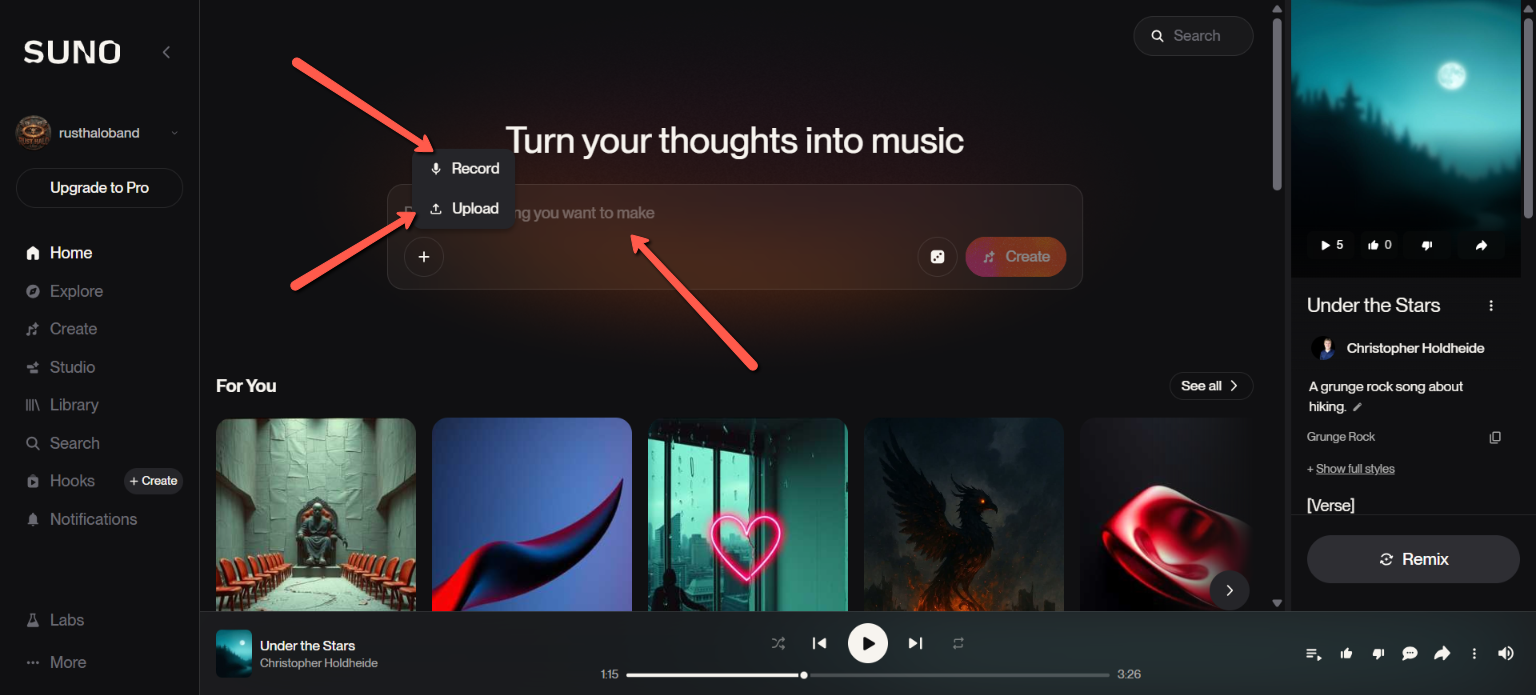
Suno (suno.com) is currently one of the most powerful text-to-music AI tools available. You type a description, a mood, a genre, a vibe, even full lyrics, and it generates a complete song with vocals, instrumentation, and structure in about 30 seconds.
Example Song: Here is a song I created using Suno, called Let’s Keep Going.
Here’s the thing most tutorials skip over: not all Suno plans allow commercial monetization. This is critical. If you’re going to distribute these tracks and earn money, you need to know exactly where you stand legally.
As of 2026:
- The free tier on Suno does not include commercial rights
- The Pro plan ($10/month or $96/year) grants commercial use rights for tracks you generate
- The Premier plan ($30/month or $288/year) provides the broadest commercial licensing
Before you upload a single track anywhere, make sure you’re on a paid plan and have read Suno’s current terms of service. They update these; check the site directly.
Setting Up Your Suno Workflow
Once you’re on the right plan, here’s how to use Suno efficiently for monetization:
- Choose your niche first. Don’t generate random tracks. Decide on a genre or use case: lofi hip-hop, dark ambient, corporate background music, workout beats, meditation soundscapes. Niches sell. Randomness doesn’t.
- Write descriptive prompts. The more specific, the better. Instead of “chill music,” try “mellow lofi hip-hop with vinyl crackle, lazy piano chords, soft rain in the background, 85 BPM, perfect for studying.” You’ll get better results dramatically.
- Generate in batches. Suno gives you multiple variations per prompt. Generate 4–8 versions, pick the best 1–2, and move on. Speed is your advantage here.
- Download in the highest quality available. For distribution and licensing, you want clean, full-quality audio files — not compressed previews.
- Organize everything. Label your tracks by genre, mood, tempo, and use case from day one. This saves enormous time when you’re licensing or pitching to clients later.
Step 3: Distribute Your AI Music to Streaming Platforms
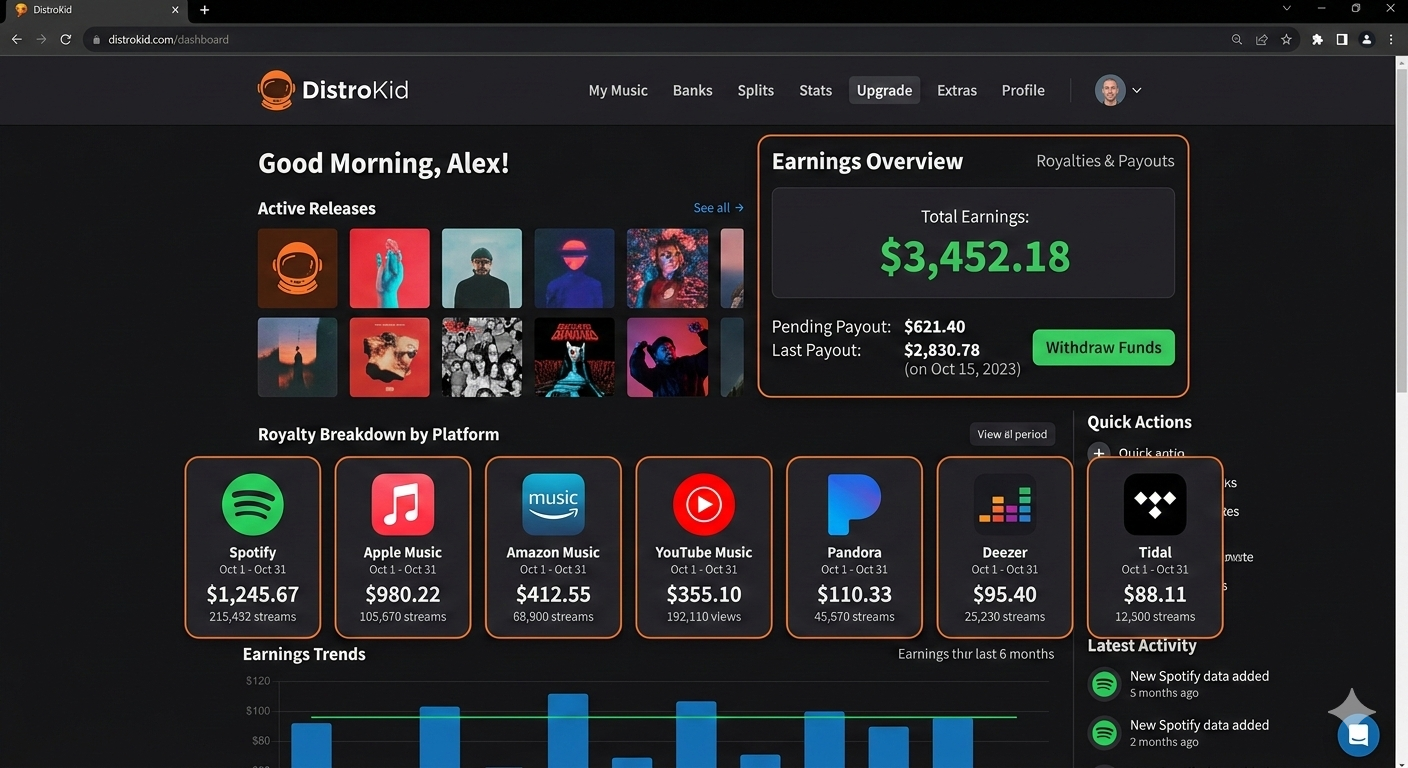
This is where most beginners get confused. You can’t just upload directly to Spotify or Apple Music as an independent artist; you need a music distributor as the middleman.
The best options for AI music creators right now are:
| Distributor | Annual Cost | AI Music Policy | Best For |
|---|---|---|---|
| DistroKid | ~$24.99 to 89.99/yr | Allows with disclosure | Volume creators, unlimited uploads |
| TuneCore | ~$24.99 to 54.99/yr or Pay Per Release | Review-based | Single releases, established artists |
| CD Baby | ~$9.99/per release | Case-by-case | One-time fee per song |
| Amuse | ~$23.99 to 59.99/yr | Limited AI support | Beginners testing the waters |
DistroKid is the most popular choice among AI music creators specifically because of its unlimited upload model, which you pay for once per year. You can distribute as many tracks as you want. Given that your strategy is catalog volume, this math works heavily in your favor.
The Important Disclosure Step
Spotify, in particular, now has policies requiring disclosure of AI-generated content in certain cases. DistroKid has a checkbox for this. Use it.
Getting caught misrepresenting AI content as purely human-made can get your account flagged or your tracks removed. The risk isn’t worth it; just be transparent and move on.
What to Expect From Streaming Revenue
Let’s be real with you here. Spotify pays roughly $0.003–$0.005 per stream. To earn $1,000/month from streaming alone, you’d need somewhere between 200,000 and 330,000 monthly streams.
That sounds daunting. But here’s the thing, you’re not relying on one track. You’re building a catalog. A creator with 500 tracks averaging 400 streams each per month is at 200,000 streams. That’s absolutely achievable over 12–18 months of consistent publishing.
Streaming is a long game. Treat it as one income layer, not your whole strategy.
Step 4: Build a YouTube Music Channel
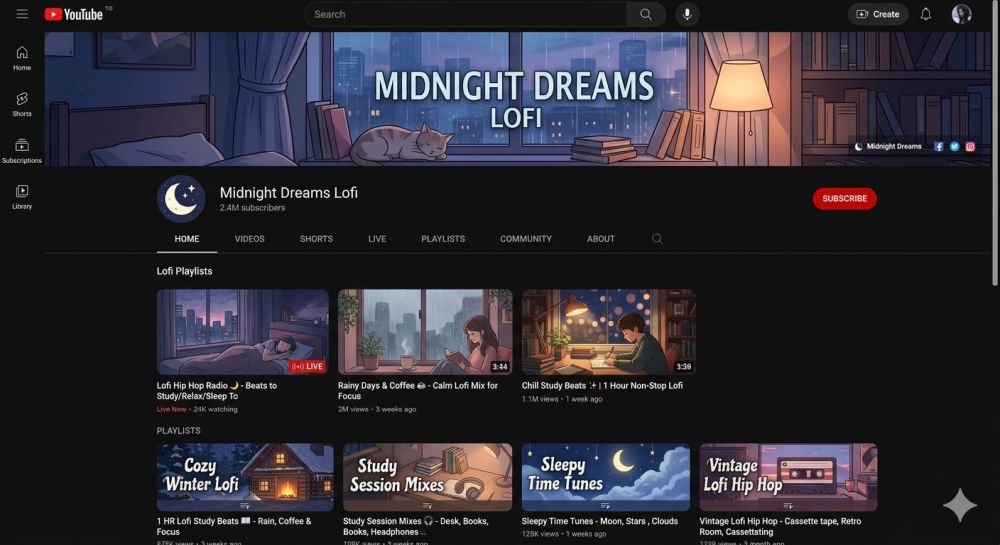
This is, without question, the fastest path to meaningful AI music income for most beginners. Here’s why: YouTube pays through ad revenue (not just streams), and the lofi/ambient/study music niche has a massive, loyal audience that watches for hours at a time. Long watch sessions = more ads = more money.
A 1-hour lofi YouTube video getting 10,000 views might earn $15–$40 in ad revenue, depending on the audience. That adds up fast when you have 30–50 videos, and they’re all getting passive views.
How to Launch Your YouTube Music Channel
Step 1: Pick a specific aesthetic and stick to it. “Lofi hip-hop” is competitive. “Lofi beats for late-night coding” or “dark academia study music” is a niche within a niche, and that specificity helps the YouTube algorithm understand who to show your videos to.
Step 2: Create 1-hour (or longer) compilations. Take 6–10 tracks you’ve generated with Suno, stitch them together (you can use free tools like Audacity or Adobe Premiere), and publish a 1-hour video. These perform dramatically better for watch time than short tracks.
Step 3: Design consistent thumbnail art. You don’t need to be a graphic designer. Use Canva with a consistent color palette and visual style. Think animated rain on a window, a cozy desk setup, pixel art cityscapes. The aesthetic is the brand on LoFi channels.
Step 4: Be consistent before you’re monetized. YouTube’s Partner Program requires 1,000 subscribers and 4,000 watch hours (or 10 million Shorts views). Most lofi channels hit this in 3–6 months with weekly uploads and decent SEO on video titles and descriptions.
Step 5: Optimize your titles. Use keywords like “lofi study music,” “AI lofi beats,” “focus music 2026,” and “background music for studying.” These are genuinely what people search for; don’t overthink it.
Step 5: License Your AI Music for Commercial Use
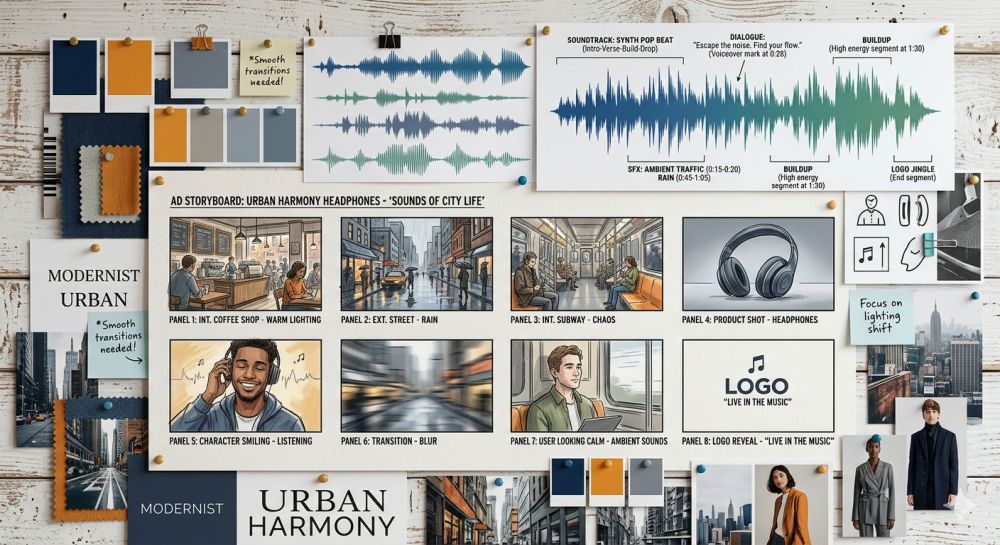
Licensing is where the real money is in music, and AI makes it more accessible than ever. A single sync license (placing your music in a TV ad, YouTube campaign, or app) can earn anywhere from $50 to $5,000+, depending on the client and the use case.
Here’s how to get started without industry connections.
Stock Music Libraries
The easiest entry point. Upload your tracks to:
- Pond5 – accepts AI music with disclosure; tracks sell for $20–$200+ each
- AudioJungle (Envato) – very high traffic, competitive but worth it for volume
- Artlist – more curated, harder to get in, but higher per-track value
- Musicbed – a premium sync platform, worth applying to once you have 30+ quality tracks
The key to stock music is volume and metadata. A track with clear, keyword-rich tags (“upbeat corporate background music for startup explainer video”) will outperform a great track with vague labels every single time.
Direct Client Licensing
This is where you can charge premium prices. Content creators, indie game developers, podcast hosts, and small brands all need music, and they often can’t afford the big licensing platforms.
Where to find clients:
- Fiverr and Upwork — search “custom background music” and see what competitors charge; start competitive, raise prices as you get reviews
- Reddit communities — r/gamedev, r/podcasting, r/youtubers — people frequently post asking for music recommendations or custom tracks
- Twitter/X and Instagram — document your Suno process publicly, show before/after prompts, demonstrate your output quality; clients will come to you
A fair pricing structure for custom AI music:
| Use Case | Suggested Price Range |
|---|---|
| YouTube video background (non-exclusive) | $20–$75 |
| Podcast intro/outro | $50–$150 |
| Game background loop (non-exclusive) | $100–$400 |
| Brand/ad campaign (exclusive rights) | $300–$2,000+ |
Step 6: Sell AI Music Packs and Beats Online
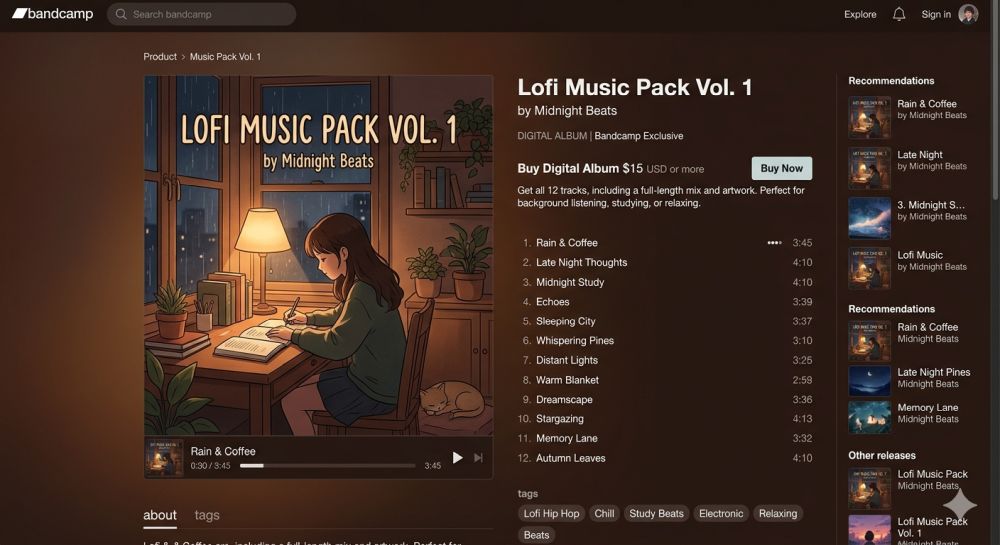
Here’s a monetization path that doesn’t rely on streaming algorithms or YouTube’s approval: sell directly to buyers.
Package your Suno-generated tracks into themed music packs and sell them on:
- Gumroad — simple, low fees, great for digital products
- Bandcamp — a music-native platform with a strong community of supporters
- BeatStars — if you’re making instrumentals and beats, this is the place
- Etsy — surprisingly effective for Lofi and ambient music packs
What sells well:
- “Study & Focus Pack” (20 lofi tracks, 1 hour of music) — price at $12–$25
- “Cinematic Background Music for YouTubers” (15 tracks, commercial license) — $30–$60
- “Horror Game Ambience Pack” (10 atmospheric loops) — $25–$50
- “Podcast Intro & Outro Bundle” (5 branded tracks) — $20–$40
The commercial license you grant buyers is what justifies the higher price point. You’re not just selling audio, you’re selling the right to use it in their projects without copyright issues. That’s valuable.
Step 7: Scale With Systems and Consistency
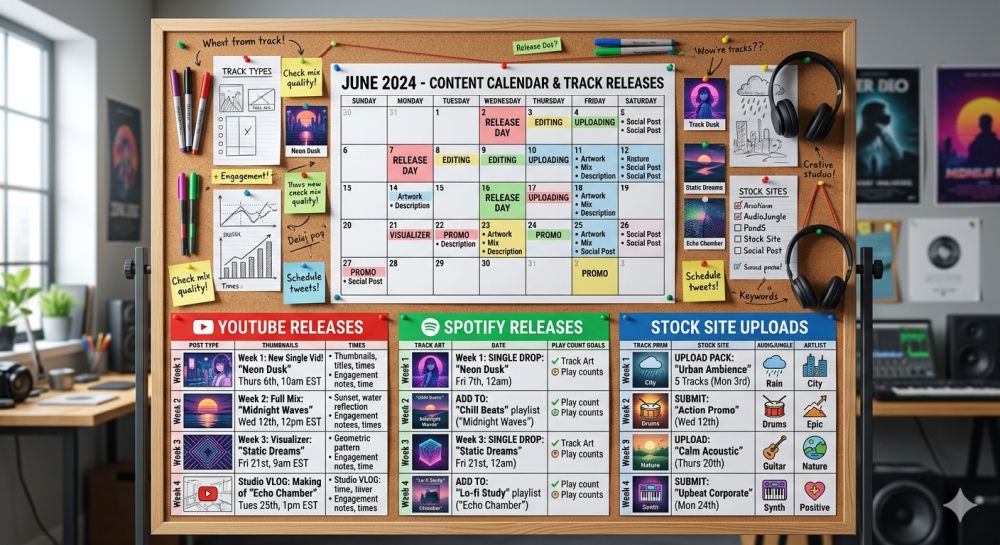
Here’s the truth about making money with AI music: the people who succeed aren’t necessarily the ones with the most musical talent or even the best AI prompts. They’re the ones who show up consistently over 6–12 months and build a system.
Here’s what a sustainable weekly workflow looks like:
Monday: Generate 10–15 tracks in your niche using Suno. Download the best 5–6.
Tuesday: Edit, compile into a 1-hour YouTube video. Schedule for Thursday.
Wednesday: Upload 2–3 individual tracks to DistroKid for streaming distribution. Upload the same tracks to a stock library.
Thursday: YouTube video goes live. Share it on social media with behind-the-scenes prompt screenshots.
Friday: Respond to any client inquiries or DMs. Check analytics from the week.
This takes 4–6 hours a week once you have the workflow dialed in. It’s not passive income from day one, but it becomes increasingly passive as your catalog grows and older content continues to generate revenue.
FAQs: Everything You’re Wondering About AI Music Income
Can you really make money with AI-generated music in 2026, or is it just hype?
It’s real, but it’s not a get-rich-quick scheme. Creators are genuinely earning from streaming, YouTube, and licensing, but a realistic monthly income for a beginner in the first year is $100–$500/month, growing significantly in years two and three as the catalog compounds.
Is it legal to monetize AI music on Spotify and YouTube?
Generally, yes, as long as you’re using a paid commercial plan on your AI tool (like Suno Pro), disclosing AI-generated content where platforms require it, and not infringing on the copyrighted material the AI may have trained on. Always read your tool’s current terms.
How does copyright work for AI-generated music?
This is evolving fast. Currently, in most jurisdictions, fully AI-generated works with no human creative input have limited copyright protection.
Tracks where you wrote lyrics, arranged structure, or made meaningful creative choices are on a stronger footing. The more human input, the clearer your ownership claim.
For this reason, many creators use Suno as a starting point and then edit, arrange, and add to the output.
What are the safest AI music tools for monetization?
Suno (Pro/Premier plans), Soundraw, AIVA, and Soundverse AI are frequently cited as tools with clear commercial licensing terms.
Always verify the current terms directly on the platform; these policies update regularly.
How much can a small creator make per month?
Reddit threads and creator communities suggest a realistic range of $200–$800/month after 12 months for someone who publishes consistently across YouTube, streaming, and one or two stock libraries.
Top earners in this space report $3,000–$10,000/month, but they’ve been at it for years and have massive catalogs.
Can I sell AI tracks for use in games, podcasts, or ads?
Absolutely. This is one of the most lucrative uses of AI music. The key is having clear licensing language that specifies what the buyer can and can’t do with the track.
When in doubt, consult a legal template or use a platform that handles licensing terms for you.
Do I need any musical skills to start?
No formal musical training needed. What does help is a good ear for what sounds right, an understanding of basic music terminology (BPM, key, genre) so you can write better prompts, and a sense of what your target audience actually listens to. Those things you can develop quickly just by listening.
The Realistic Timeline: What to Expect Month by Month
Look, I’m not going to tell you you’ll be making $10,000 a month by next Tuesday. Here’s a more honest picture:
Months 1–2: Setup phase. Create accounts, learn Suno, generate 30–50 tracks, publish your first YouTube videos, and stock library uploads. Revenue: $0–$20.
Months 3–4: Momentum building. YouTube channel approaching monetization threshold. First stock music sales trickle in. Revenue: $20–$100.
Months 5–6: Monetization unlocked on YouTube (if consistent). Streaming catalogs are gaining traction. First client inquiry, possibly via Fiverr/Upwork. Revenue: $100–$300.
Months 7–12: Compounding catalog effect. Multiple income streams are active. YouTube ad revenue + streaming + occasional licensing sale. Revenue: $300–$800+.
Year 2+: If you’ve stayed consistent, you have hundreds of tracks working for you passively. This is where the real income potential lives.
Final Thoughts: The Window Is Open — But It Won’t Stay This Wide Forever
AI music is in a weird, brief window right now. The tools are powerful, the competition from other AI music creators is still relatively low, and the platforms haven’t fully locked down their policies yet. That window will narrow. It always does.
The creators who look back on 2025–2026 as the year that changed their financial trajectory will be the ones who started before it was crowded, stayed consistent when results were slow, and treated this like a business, not a lottery ticket.
You’ve got the tool (Suno). You’ve got the strategy. The only question now is whether you actually open the app tonight and generate your first track.
So, what are you waiting for?
Start with Suno’s Pro plan, pick one niche, and publish your first five tracks this week. That’s the entire first step. Everything else follows from there.



![Udemy vs Teachable – Which Platform is the Best [Updated for 2018]](https://sidehustleacademy.com/wp-content/uploads/2016/03/Udemy-vs-Teachable.jpg)