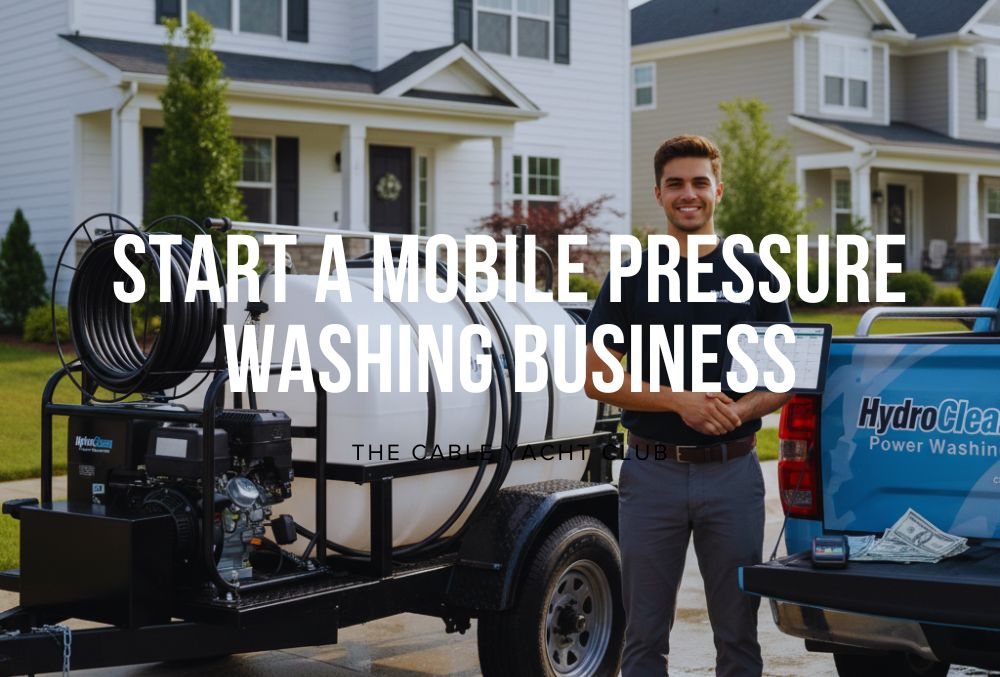
How to Start a Mobile Pressure Washing Business: Your Complete Step-by-Step Guide
If you’re looking for a new side hustle or a way to escape the 9 to 5 then maybe starting a mobile pressure washing business could be the opportunity you’re looking for. I’ve seen a lot of people doing this in my local area, but there are some things you need to know before you get started.
Starting a mobile pressure washing business, you will need to buy some basic equipment, obtain a license, permits, and insurance. Next, you will need to price your services competitively and put together a basic business plan. Finally, market your business, set up a website or Facebook page, and land your first clients.
So whether you want to quit the 9 to 5 or become a weekend warrior, pressure washing can be that opportunity for you. So if you want to learn how to start a mobile pressure washing business, keep reading to get started.
Step 1: Understanding What a Mobile Pressure Washing Business Actually Is
Before we dive into the nuts and bolts, let’s get clear on what we’re talking about here. A mobile pressure washing business is exactly what it sounds like—you bring the cleaning power to your customers. No storefront, no fixed location. Just you, your equipment, and the open road.
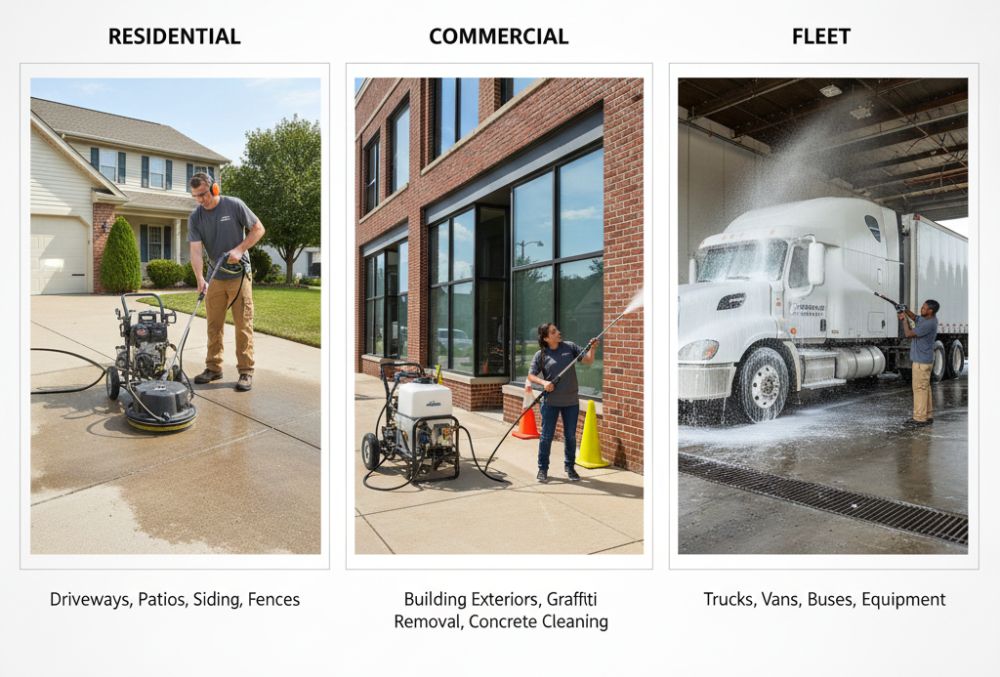
Think of it as the food truck of the cleaning world. You’re providing a service that homeowners and businesses desperately need but don’t want to do themselves. We’re talking driveways, patios, building exteriors, fleet vehicles, restaurant parking lots—basically any surface that’s accumulated months (or years) of grime, mold, and general nastiness.
The beauty of going mobile? Your overhead is lower than that of a traditional brick-and-mortar operation. You’re not paying rent on a storefront. You’re bringing the service directly to where it’s needed, which customers love because, let’s face it, convenience is king in today’s economy.
Step 2: Crunching the Numbers—Startup Costs and Capital
Alright, let’s talk money. How much startup capital do you actually need to launch a mobile pressure washing business?
Here’s where I’ll give you the real talk: you can start lean or you can start premium. Your initial investment will typically range anywhere from $2,000 to $10,000+, depending on how aggressive you want to go out of the gate.
Basic Startup Cost Breakdown
| Expense Category | Budget Option | Mid-Range | Premium |
|---|---|---|---|
| Pressure Washer (Gas/Diesel) | $400-$800 | $1,200-$2,500 | $3,000-$5,000+ |
| Surface Cleaners | $150-$300 | $400-$700 | $800-$1,500 |
| Hoses, Reels, & Fittings | $200-$400 | $500-$800 | $1,000-$1,500 |
| Chemicals & Detergents | $100-$200 | $200-$400 | $500+ |
| Safety Gear | $100-$150 | $200-$300 | $400+ |
| Trailer/Vehicle Setup | $500-$1,500 | $2,000-$4,000 | $5,000-$8,000 |
| Insurance (First Year) | $500-$1,000 | $1,000-$2,000 | $2,000-$3,000 |
| Business Licensing | $100-$300 | $300-$500 | $500-$1,000 |
| Marketing Materials | $200-$400 | $500-$1,000 | $1,500-$3,000 |
| Total Estimated | $2,250-$5,050 | $6,300-$12,200 | $14,700-$24,500 |
Can you start with less? Absolutely. I know people who started with a consumer-grade pressure washer from Home Depot and built up from there. But if you’re serious about this as a real business and not just a side hustle, I’d recommend having at least $3,000-$5,000 ready to go.
The key is buying equipment that won’t break down after three jobs. Trust me, nothing kills your reputation faster than showing up to a job and having your pressure washer sputter and die.
Step 3: Getting Your Equipment Dialed In
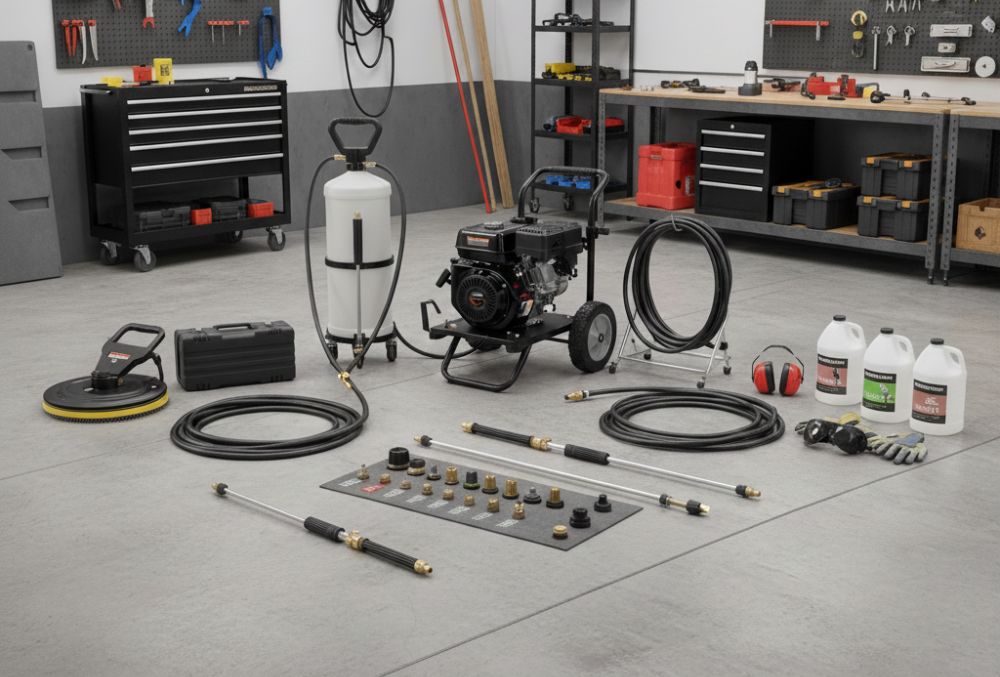
Let’s talk about the essential pieces of equipment for your mobile pressure washing business. This is where a lot of beginners either overspend on gear they don’t need or cheap out on the essentials. Neither approach is ideal.
Recommended Tools: All the tools I mention below can be found at Pressure Washers Direct.
The Non-Negotiables:
1. Commercial-Grade Pressure Washer You need something with at least 3,000-4,000 PSI and 3-4 GPM (gallons per minute). Gas or diesel is the way to go for mobile work—electric washers are fine for home use, but they’re not going to cut it when you’re tackling commercial jobs or spending all day on driveways.
2. Surface Cleaner This is your secret weapon for flat surfaces. A good surface cleaner can turn a four-hour driveway job into a one-hour job. Look for something in the 15-20 inch range to start.
3. High-Pressure Hoses and Reels Don’t cheap out here. You need hoses that can handle the pressure and won’t kink every five minutes. Get a good reel system to keep everything organized—nothing screams “amateur” like tangled hoses.
4. Chemical Injector System For tougher jobs involving mold, mildew, or oil stains, you’ll need the ability to apply cleaning solutions. A proper injector system or downstream injector is essential.
5. Safety Equipment This isn’t optional. You need:
- Safety goggles (water and chemicals at high pressure are no joke)
- Heavy-duty gloves
- Non-slip boots
- Hearing protection
- High-visibility clothing if you’re working near roads
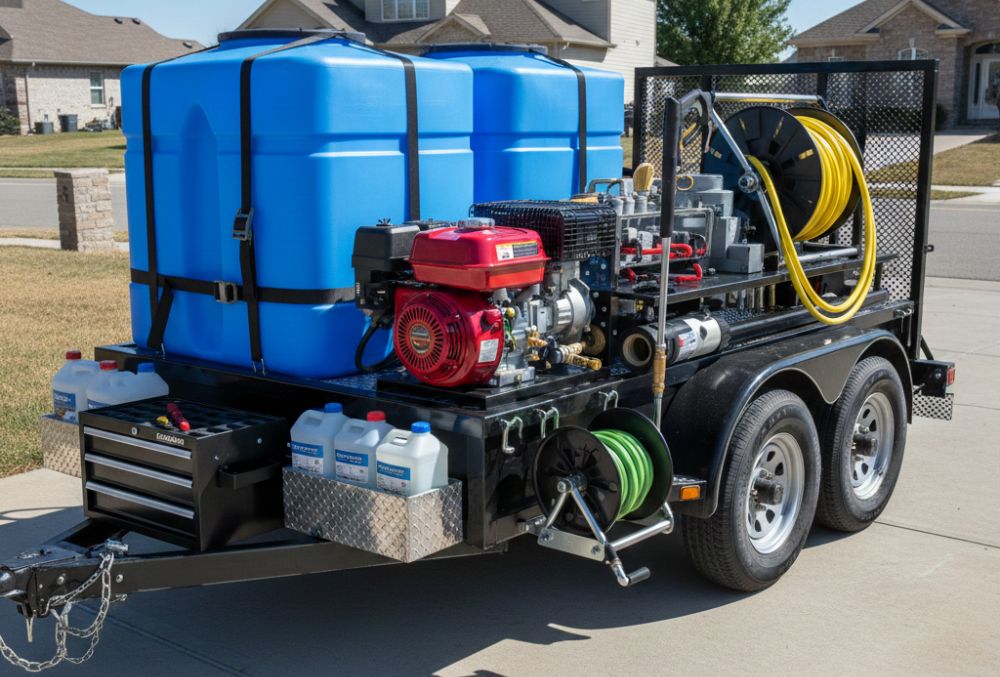
6. Trailer or Truck Mount: Your equipment needs a home. Many people start with a trailer setup because it’s versatile and you can tow it with most vehicles. As you grow, you might graduate to a dedicated truck with a permanent mount.
Step 4: Navigating Licenses, Permits, and Legal Stuff
Okay, this is the part where most people’s eyes glaze over, but stay with me because skipping this step can torpedo your entire operation.
What licenses or permits do you need to operate a mobile pressure washing business? The answer is annoyingly vague: it depends on where you are.
Here’s what you’ll likely need:
Basic Business License – Nearly every city or county requires this. It’s usually straightforward and costs between $50-$300.
DBA (Doing Business As) – If you’re operating under a business name that’s not your legal name, you’ll need to register it.
Federal Tax ID (EIN) – Free from the IRS and essential if you’re going to hire employees or operate as anything other than a sole proprietorship.
State-Specific Licenses – Some states require specific contractor licenses for pressure washing services. Check with your state’s licensing board.
Environmental Permits – Here’s where it gets interesting. Some municipalities have regulations about wastewater disposal and runoff. You can’t just blast dirty water into storm drains in many areas—that wastewater can contain chemicals, oil, grease, and other nasty stuff that shouldn’t enter the water system.
Vehicle Commercial License – If you’re using a trailer, make sure your vehicle is properly licensed for commercial use.
Pro tip: Call your local Small Business Administration office or visit their website. They can walk you through exactly what’s required in your area. It might feel like bureaucratic overkill, but getting this right from the start saves massive headaches later.
Step 5: Insurance—Because Life Happens
Do you need insurance? Let me answer that with a question: Do you like owning your house, car, and having a bank account that isn’t completely drained by a lawsuit?
Insurance isn’t just recommended—it’s essential for a pressure washing business. You’re operating powerful equipment that can cause serious damage if used incorrectly. I’m talking broken windows, damaged siding, ruined paint jobs, or even injury.
Recommended Tools: NEXT Insurance has some of the most competitive options available and is a one-stop shop for all of your business insurance needs.
Types of Insurance You Need:
General Liability Insurance – This covers property damage and bodily injury. If you accidentally blast a hole through someone’s window or they slip on your wet surface, this has you covered. Expect to pay $500-$2,000 annually, depending on your coverage limits.
Commercial Auto Insurance – Your personal auto policy probably won’t cover business use of your vehicle. You need commercial coverage for your truck and trailer.
Equipment Insurance – Your gear represents a significant investment. Protect it against theft, damage, or loss.
Workers’ Compensation – If you hire employees, this is legally required in most states.
I know insurance feels like throwing money into a void, but trust me—one incident without coverage can end your business before it really starts.
Step 6: Pricing Your Services Like a Pro
How should you price your mobile pressure washing services? This is where art meets science, and honestly, where a lot of new businesses leave money on the table.
You’ve got a few pricing approaches:
Per Square Foot – Common for driveways and large flat surfaces. Rates typically range from $0.15 to $0.50 per square foot, depending on the difficulty and your market.
Hourly Rate – Usually $75-$200 per hour, depending on your location and the type of work. Commercial work typically commands higher rates.
Flat Rate Per Job – Many customers prefer knowing the total upfront. You estimate the time and materials, add your profit margin, and quote a fixed price.
Sample Pricing Guide
| Service Type | Typical Price Range | Notes |
|---|---|---|
| Residential Driveway (500 sq ft) | $100-$250 | Depends on staining and condition |
| House Exterior Wash | $200-$600 | Based on size and stories |
| Deck or Patio Cleaning | $150-$400 | Wood requires more care/lower PSI |
| Commercial Parking Lot | $300-$1,000+ | Usually quoted per square foot |
| Fleet Vehicle Washing | $25-$75 per vehicle | Can offer package deals |
| Sidewalk/Walkway Cleaning | $100-$300 | Linear footage pricing common |
Also, remember you need to track your overhead. Things like soaps, hoses, fuel, and your time are all factors that go into how much you should charge. Track your monthly expenses, the amount of time you have in it, and this will help you determine how much you should charge
Below is an example list of estimated monthly costs you may have in your business. You may not have all of these, but you can use thisto help you determine what your hourly rate should be.
| Category | Estimated Monthly Cost | Notes |
| Vehicle Expenses | ||
| Vehicle Payment/Lease | $400 – $800 | (If applicable) Cost for your truck or van. |
| Fuel | $300 – $700 | Varies greatly depending on travel distance, gas prices, and vehicle MPG. |
| Vehicle Insurance | $100 – $250 | Commercial vehicle insurance is essential. |
| Maintenance & Repairs | $50 – $150 | Regular servicing of the pressure washer, engine oil changes, pump repairs, hose replacements, nozzle replacements. |
| Equipment Expenses | ||
| Equipment Payment/Lease | $0 – $300 | (If applicable) For pressure washer, surface cleaner, etc. Many start by purchasing outright. |
| Equipment Maintenance/Repairs | $50 – $200 | Regular servicing of the pressure washer, engine oil changes, pump repairs, hose replacements, and nozzle replacements. |
| Detergents & Chemicals | $100 – $300 | Cost of cleaning solutions, degreasers, and other specialized chemicals. Varies based on volume and types of jobs. |
| Water (if not sourced on-site) | $50 – $150 | If you need to fill tanks or pay for water at a commercial source. Often, you use the client’s water. |
| Insurance & Licensing | ||
| General Liability Insurance | $75 – $150 | Crucial for protecting against property damage or injury claims. |
| Business Licenses/Permits | $10 – $30 | Average monthly cost for annual or multi-year licenses and permits (e.g., business license, environmental permits). |
| Marketing & Admin | ||
| Advertising/Marketing | $50 – $300 | Online ads (Google, social media), flyers, local directory listings, website hosting, business cards. |
| Phone/Internet | $50 – $100 | Business phone line or cell phone plan, internet for administrative tasks. |
| Office Supplies | $10 – $30 | Invoices, pens, paper, etc. |
| Accounting/Bookkeeping | $0 – $150 | If you use software (like QuickBooks) or hire a bookkeeper. |
| Website Hosting/Domain | $10 – $25 | If you have a professional website. |
| Miscellaneous | ||
| PPE (Personal Protective Equipment) | $10 – $20 | Gloves, safety glasses, hearing protection, masks – replenish as needed. |
| Contingency/Emergency Fund | $100 – $200 | Always good to have a buffer for unexpected costs or slow months. |
| Total Estimated Monthly Costs | $1265 – $3235 | This is a wide range and highly dependent on your specific setup, location, volume of work, and whether you lease or own your major assets. |
Here’s my advice:
- Don’t be the cheapest option in town. When you compete on price alone, you’re in a race to the bottom. Instead, compete on quality, reliability, and customer service.
- Show up on time. Do what you say you’re going to do.
- Answer your phone. You’d be amazed at how rare these qualities are, and customers will gladly pay a premium for them.
Step 7: Writing Your Business Plan (It Doesn’t Have to Be Fancy)
A business plan for a mobile pressure washing startup doesn’t need to be a 50-page thesis. But you do need to think through some key elements:
Your Target Market – Are you going after residential customers, commercial clients, or both? Each requires different marketing and equipment.
Service Offerings – Will you specialize in certain types of cleaning? Driveways and patios? Fleet washing? Commercial buildings?
Pricing Strategy – We covered this, but document your rates and how you calculated them.
Marketing Plan – How will you get customers? (We’ll dive deeper into this next)
Financial Projections – What are your monthly expenses? How many jobs do you need to break even? When will you be profitable?
Growth Strategy – Where do you see the business in one year? Three years? Will you hire employees? Buy more equipment?
Even a simple one-page business plan forces you to think through these questions before you’re scrambling to figure them out on the fly.
Recommend Tool: Click here is a simple business plan I created to help you create your buisness plan for your mobile pressure washing business.
Step 8: Marketing Your Pressure Washing Business
Alright, you’ve got equipment, licenses, insurance, and a plan. Now comes the crucial question: How do you attract your first paying customers quickly?
This is where the rubber meets the road. You can have the best equipment and technique in the world, but if nobody knows you exist, you’re just a guy with an expensive pressure washer.
Marketing Channels That Actually Work:
1. Local SEO and Google My Business. Claim and optimize your Google My Business listing. When someone searches “pressure washing near me,” you want to show up. This is arguably the most important marketing channel for local service businesses. Make sure your profile has:
- Professional photos of your work
- Complete business information
- Service areas are clearly listed
- Encouraging customers to leave reviews
2. Door-to-Door and Neighborhog Marketing. Old school but effective. When you finish a job in a neighborhood, leave flyers on nearby doors. People see their neighbor’s freshly cleaned driveway and think, “Man, mine looks terrible by comparison.” Strike while the iron’s hot.
3. Social Media—Especially Facebook and Instagram. Post before-and-after photos. They’re oddly satisfying content that performs incredibly well. Join local community Facebook groups and build relationships (don’t just spam your services—actually be helpful and engaged).
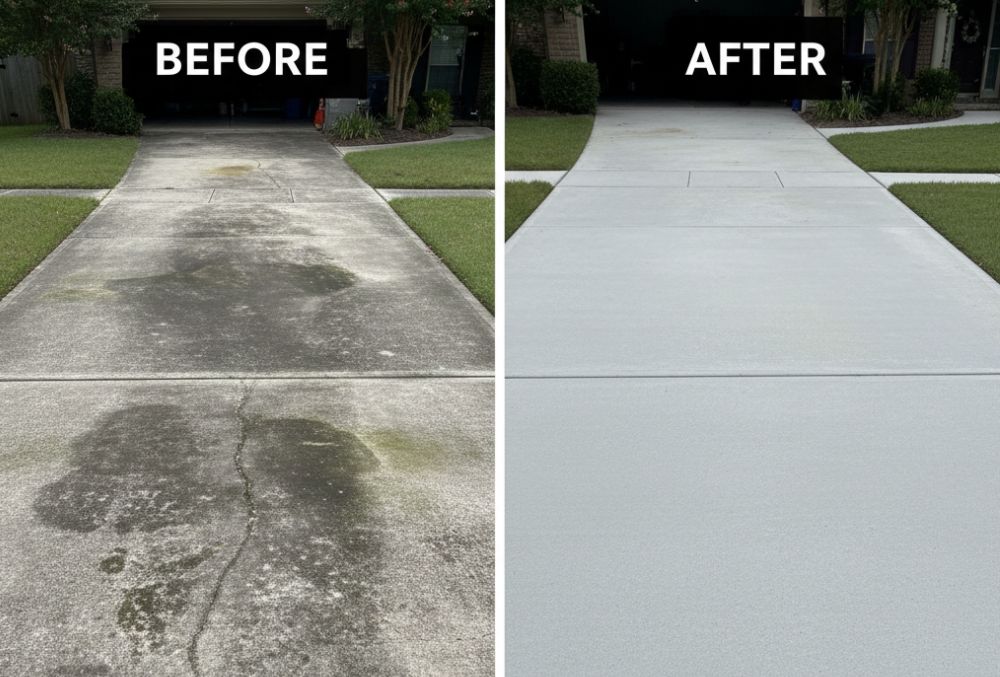
4. Vehicle Wrap or Magnetic Signs: Your truck and trailer are mobile billboards. Invest in professional-looking branding with your business name, phone number, and website. Every mile you drive is advertising.
5. Yard Signs at Job Sites. With the property owner’s permission, put up a sign while you’re working. Neighbors are curious, and it’s free advertising.
6. Nextdoor and Local Online Communities. These platforms are goldmines for home service businesses. Build a good reputation on Nextdoor and watch the referrals roll in.
7. Partnership with Related Businesses Connect with real estate agents, property managers, landscaping companies, and home improvement contractors. They often need reliable pressure washing services for their clients.
8. Paid Advertising (Once You’re Ready) Google Ads and Facebook Ads can work, but I’d recommend getting some organic traction first so you understand your customer acquisition cost and lifetime value.
Your First 10 Customers
Here’s a proven strategy to land your first ten paying customers:
- Offer friends and family a “friends and family rate” (still charge something—free work devalues your service)
- Ask for detailed reviews and permission to use before/after photos
- Provide exceptional service and ask for referrals
- Use those reviews and photos in your marketing
- Hit up local community boards and Nextdoor with a special “new business” discount
- Follow up with every lead promptly—speed matters
- Network at the local chamber of commerce or business meetups
Can you operate a mobile pressure washing business part-time? Absolutely. In fact, I’d recommend keeping your day job initially while you build the business on evenings and weekends. Once you’re consistently booked and profitable, then consider going full-time.
Step 9: Operations—Running a Tight Ship
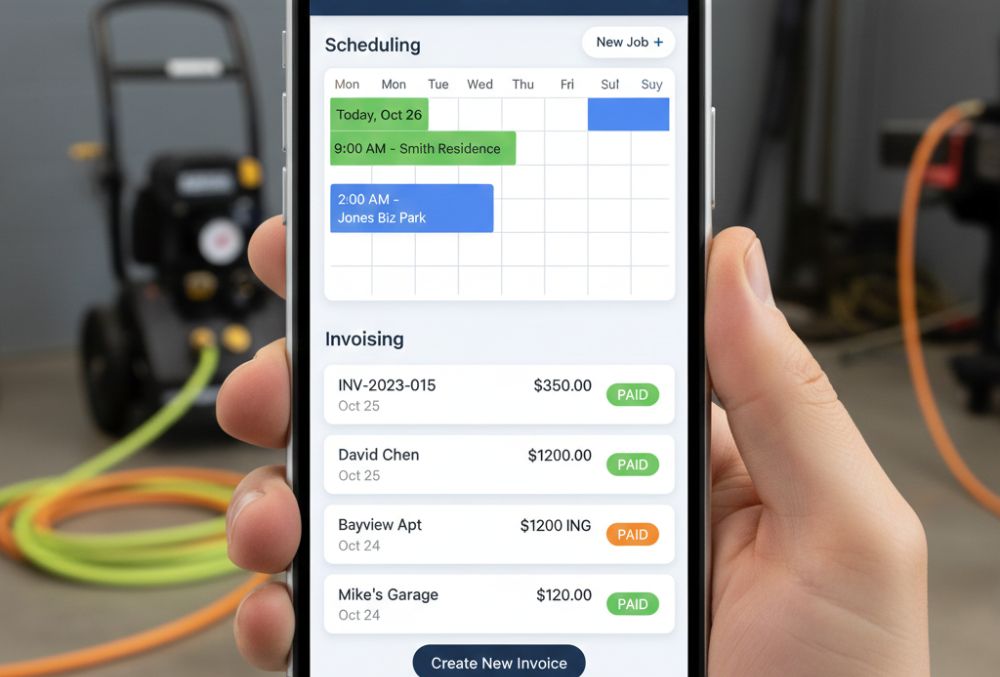
How do you manage scheduling, invoicing, and customer communications efficiently? Technology is your friend here.
You don’t need enterprise software, but you do need systems. Consider tools like:
Jobber, Housecall Pro, or ServiceTitan – These are designed specifically for field service businesses. They handle scheduling, invoicing, customer communications, and even payment processing.
Square or PayPal – For accepting credit card payments on-site. Cash and checks are fine, but offering card payment makes it easier for customers to say yes.
Google Calendar – If you’re starting lean, a simple shared calendar can work for scheduling.
QuickBooks or FreshBooks – For tracking income, expenses, and taxes. Your future accountant will thank you.
The goal is to make it easy for customers to book you, easy for you to show up prepared, and easy to get paid. Remove friction from every step of the process.
Step 10: Safety First (Seriously)
What safety precautions are important when operating a pressure washer? More than you might think.
Pressure washers operate at 2,000-4,000+ PSI. That’s enough force to strip paint, damage wood, shatter glass, and seriously injure you or someone else. I’ve seen pictures of pressure washer injuries—you don’t want to see them.
Critical Safety Rules:
- Never point the wand at yourself or others – This seems obvious, but accidents happen when you’re tired or distracted
- Wear proper PPE at all times – Goggles, gloves, boots, and hearing protection
- Be aware of kickback – When the trigger releases, there’s a kickback force
- Watch for electrical hazards – Don’t spray near power lines or electrical panels
- Use proper ladder safety – When cleaning higher surfaces, secure your ladder and never overreach
- Chemical safety – Read all product labels, use proper dilution ratios, and never mix chemicals unless specifically designed to be mixed
- Surface testing – Always test your pressure and technique on an inconspicuous area first
- Wastewater awareness – Be mindful of where runoff is going and local environmental regulations
Consider taking a safety certification course. Not only will it make you better at your job, but it’s a selling point when bidding on commercial contracts.
Step 11: Avoiding Common Mistakes
What are the most common mistakes new mobile pressure washing businesses make? I’ve seen these kill more startups than I can count:
1. Underpricing to Get Business: Competing on price alone attracts the worst customers and leaves you broke. Charge what you’re worth.
2. Skipping Insurance: One lawsuit will end your business. Don’t gamble.
3. Using Too Much Pressure: More pressure isn’t always better. You can damage surfaces, and repairs eat into profits fast.
4. Poor Customer Communication: Not returning calls, showing up late, or failing to set clear expectations destroys your reputation.
5. Neglecting Equipment Maintenance: Your equipment is your livelihood. Regular maintenance prevents breakdowns at the worst possible moment.
6. Not Tracking Finances: You need to know your numbers. What’s your profit per job? What are your monthly expenses? Where’s the money going?
7. Ignoring Environmental Regulations: Wastewater disposal violations can result in hefty fines and legal problems.
8. Failing to Get Reviews: Social proof is everything. Ask satisfied customers for reviews and make it easy for them to leave one.
Step 12: Building Your Reputation
How do you handle customer reviews and reputation management? Like your business depends on it—because it does.
In the service business, your reputation is your most valuable asset. One bad review can cost you ten potential customers. One great review can bring you twenty.
Proactive Reputation Strategy:
- Ask for reviews immediately after completing a job (while they’re happy)
- Make it easy—send a direct link to your Google or Facebook page
- Respond to ALL reviews, both positive and negative
- Use feedback to improve your service
- Showcase your best reviews in marketing materials
- Address negative reviews professionally and offer to make things right
If you mess up (and eventually, you will—we’re all human), own it. Apologize, fix it, and move on. How you handle problems often matters more than the problems themselves.
Step 13: Scaling Your Business
Once you’ve got a solid foundation and consistent work, you’ll face the question: Should you stay solo or scale up?
Scaling a pressure washing business typically follows this path:
Phase 1: Solo Operator – You’re doing everything yourself. Learning the business, building reputation, refining processes.
Phase 2: Part-Time Help – You bring on a helper for bigger jobs or when you’re getting overwhelmed.
Phase 3: Second Crew – You hire and train someone to run a second rig while you handle another route or focus on sales and operations.
Phase 4: Multiple Crews – You’re now managing the business, not doing the work. You’ve got several crews running daily.
Each phase requires different skills and presents different challenges. The jump from doing the work to managing people is huge. Not everyone wants to make it, and that’s fine. There’s nothing wrong with being a profitable solo operation.
Specialized Niches to Consider
As you grow, you might want to specialize. Some profitable niches within pressure washing include:
- Fleet Washing – Contract with businesses that have multiple vehicles
- Commercial Building Exteriors – Regular maintenance contracts
- Roof Cleaning – Requires specialized equipment and technique
- Graffiti Removal – Can command premium pricing
- Restaurant and Food Service – Regular cleaning requirements due to health codes
- HOA and Property Management – Recurring contracts for community common areas
Specialization allows you to charge more, work more efficiently, and become known as the expert in that particular area.
The Environmental Responsibility Piece
What are common environmental compliance considerations? This is increasingly important and something savvy business owners are getting ahead of.
Wastewater from pressure washing can contain:
- Oil and grease
- Heavy metals
- Cleaning chemicals
- Sediment and debris
- Bacteria and pathogens
Just letting it run into storm drains is illegal in many jurisdictions and environmentally harmful. You need to:
- Understand local regulations about wastewater disposal
- Use eco-friendly cleaning agents when possible
- Consider water reclamation systems for large commercial jobs
- Properly contain and dispose of wastewater when required
- Document your compliance for commercial clients
Some commercial clients will specifically ask about your environmental practices. Being able to demonstrate responsible water management can be a competitive advantage.
Wrapping It All Up
Starting a mobile pressure washing business isn’t rocket science, but it does require planning, investment, and hustle. The barrier to entry is relatively low compared to many businesses, but building something sustainable takes effort.
The good news? There’s genuine demand for these services. Property owners need their stuff cleaned, and most of them would rather pay someone else to do it. The even better news? Once you build a reputation and client base, the recurring nature of cleaning services means customers come back.
You won’t get rich overnight. But if you provide quality work, treat customers well, run your business professionally, and market consistently, you can build something solid. Maybe it starts as a weekend side hustle that brings in an extra $1,000-$2,000 a month. Maybe it becomes a full-time operation generating six figures annually. Maybe you scale it into a multi-crew operation that runs without you.
The path you take depends on your goals, your hustle, and how well you execute the fundamentals we’ve covered.
Your Next Steps
So what now? Don’t let this just be another article you read and forget. Here’s your action plan:
- This week: Research licensing requirements in your area and determine your startup budget
- This month: Purchase essential equipment and get properly insured
- Next month: Complete all legal requirements and do your first paying job
- Month three: Have systems in place for scheduling, invoicing, and customer management
- Month six: Evaluate your progress, refine your pricing, and plan your growth strategy
The mobile pressure washing business is waiting for you. The driveways are dirty, the customers are out there, and honestly, there’s something deeply satisfying about transforming a grimy surface into something that looks brand new.
Now get out there and make it happen.
Ready to launch your pressure washing business? Please leave a comment below with your biggest question or concern, and we’ll discuss it further. And if this guide helped you, share it with someone else who’s considering leaping into entrepreneurship.